Featured
Table of Contents
- – The Shift from Strings to Things in 2026
- – Predictive Analytics and Intent Mapping in Las...
- – The Merging of SEO and AEO
- – Semantic Clusters and Material Intelligence Me...
- – Technical Requirements for Search Visibility ...
- – The Impact of Generative Engine Optimization (...
- – Human Knowledge in an Automated Age
The Shift from Strings to Things in 2026
Browse technology in 2026 has moved far beyond the basic matching of text strings. For several years, digital marketing relied on determining high-volume phrases and inserting them into specific zones of a website. Today, the focus has actually shifted toward entity-based intelligence and semantic importance. AI designs now interpret the hidden intent of a user query, thinking about context, place, and previous behavior to deliver responses instead of just links. This modification suggests that keyword intelligence is no longer about discovering words people type, but about mapping the principles they look for.
In 2026, search engines work as massive understanding charts. They do not simply see a word like "car" as a series of letters; they see it as an entity connected to "transportation," "insurance coverage," "upkeep," and "electric lorries." This interconnectedness requires a technique that treats material as a node within a bigger network of info. Organizations that still focus on density and positioning discover themselves invisible in an age where AI-driven summaries dominate the top of the outcomes page.
Information from the early months of 2026 shows that over 70% of search journeys now include some type of generative response. These reactions aggregate details from throughout the web, pointing out sources that demonstrate the highest degree of topical authority. To appear in these citations, brands should prove they understand the whole subject, not just a few lucrative expressions. This is where AI search visibility platforms, such as RankOS, provide an unique advantage by recognizing the semantic gaps that conventional tools miss out on.
Predictive Analytics and Intent Mapping in Las Vegas
Regional search has actually gone through a substantial overhaul. In 2026, a user in Las Vegas does not get the same outcomes as someone a few miles away, even for identical questions. AI now weighs hyper-local information points-- such as real-time inventory, regional occasions, and neighborhood-specific patterns-- to focus on results. Keyword intelligence now consists of a temporal and spatial measurement that was technically difficult just a few years ago.
Method for NV concentrates on "intent vectors." Rather of targeting "finest pizza," AI tools examine whether the user desires a sit-down experience, a fast piece, or a shipment alternative based upon their existing motion and time of day. This level of granularity needs services to keep extremely structured data. By utilizing advanced content intelligence, business can predict these shifts in intent and adjust their digital presence before the demand peaks.
Steve Morris, CEO of NEWMEDIA.COM, has regularly discussed how AI removes the uncertainty in these regional methods. His observations in major organization journals recommend that the winners in 2026 are those who utilize AI to decipher the "why" behind the search. Numerous companies now invest heavily in RankOS to guarantee their information stays available to the big language designs that now serve as the gatekeepers of the internet.
The Merging of SEO and AEO
The distinction between Browse Engine Optimization (SEO) and Response Engine Optimization (AEO) has actually mostly vanished by mid-2026. If a website is not enhanced for a response engine, it effectively does not exist for a big part of the mobile and voice-search audience. AEO needs a different type of keyword intelligence-- one that concentrates on question-and-answer pairs, structured information, and conversational language.
Conventional metrics like "keyword problem" have been changed by "mention possibility." This metric computes the likelihood of an AI design including a specific brand name or piece of material in its created action. Accomplishing a high reference probability involves more than just good writing; it requires technical accuracy in how information exists to spiders. Strategic Legal Search Authority Plans provides the necessary data to bridge this space, allowing brand names to see exactly how AI representatives view their authority on a given subject.
Semantic Clusters and Material Intelligence Methods
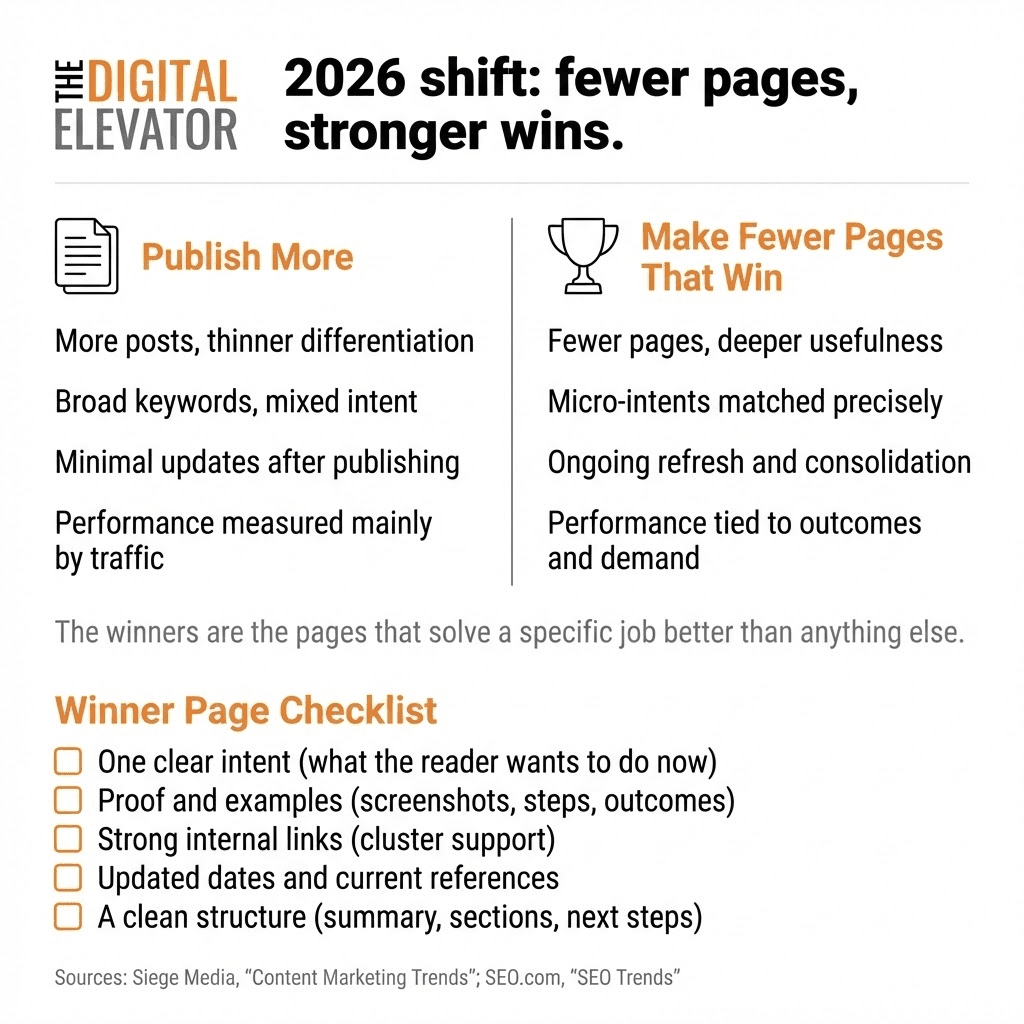
Keyword research in 2026 focuses on "clusters." A cluster is a group of related topics that collectively signal know-how. For instance, a company offering specialized consulting wouldn't just target that single term. Rather, they would construct an info architecture covering the history, technical requirements, cost structures, and future patterns of that service. AI utilizes these clusters to determine if a site is a generalist or a real specialist.
This approach has actually altered how content is produced. Instead of 500-word blog posts fixated a single keyword, 2026 methods favor deep-dive resources that answer every possible question a user might have. This "total protection" model ensures that no matter how a user expressions their inquiry, the AI design finds a pertinent area of the site to recommendation. This is not about word count, but about the density of truths and the clearness of the relationships in between those facts.
In the domestic market, companies are moving far from siloed marketing departments. Keyword intelligence is now a cross-functional discipline that informs item development, customer care, and sales. If search information reveals a rising interest in a specific feature within a specific territory, that info is immediately utilized to update web content and sales scripts. The loop between user question and company response has actually tightened substantially.
Technical Requirements for Search Visibility in 2026
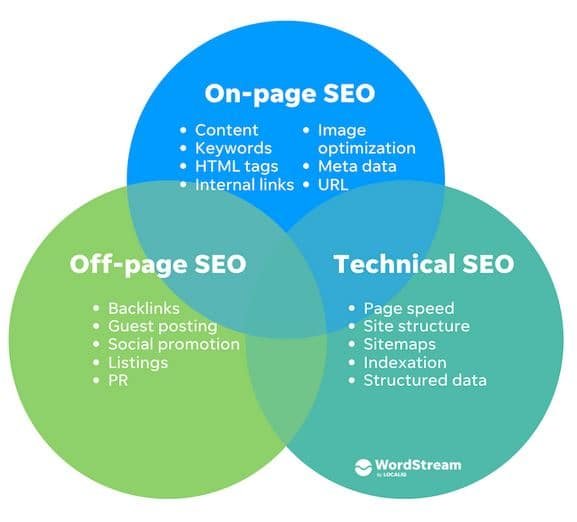
The technical side of keyword intelligence has actually become more demanding. Browse bots in 2026 are more efficient and more critical. They focus on websites that utilize Schema.org markup correctly to specify entities. Without this structured layer, an AI might struggle to understand that a name refers to an individual and not an item. This technical clarity is the foundation upon which all semantic search techniques are constructed.
Latency is another factor that AI designs think about when choosing sources. If two pages provide similarly legitimate info, the engine will mention the one that loads much faster and supplies a better user experience. In cities like Denver, Chicago, and Nashville, where digital competition is intense, these marginal gains in efficiency can be the distinction in between a top citation and overall exclusion. Organizations increasingly rely on Legal Search Authority in Litigation to preserve their edge in these high-stakes environments.
The Impact of Generative Engine Optimization (GEO)
GEO is the most recent development in search strategy. It particularly targets the method generative AI manufactures info. Unlike standard SEO, which takes a look at ranking positions, GEO takes a look at "share of voice" within a generated answer. If an AI sums up the "leading suppliers" of a service, GEO is the process of guaranteeing a brand is one of those names and that the description is accurate.
Keyword intelligence for GEO includes analyzing the training data patterns of major AI models. While companies can not know precisely what is in a closed-source model, they can utilize platforms like RankOS to reverse-engineer which kinds of content are being preferred. In 2026, it is clear that AI prefers content that is unbiased, data-rich, and pointed out by other authoritative sources. The "echo chamber" result of 2026 search implies that being pointed out by one AI typically results in being pointed out by others, creating a virtuous cycle of exposure.
Technique for professional solutions need to account for this multi-model environment. A brand may rank well on one AI assistant however be completely absent from another. Keyword intelligence tools now track these disparities, allowing online marketers to customize their material to the specific choices of various search representatives. This level of subtlety was unimaginable when SEO was just about Google and Bing.
Human Knowledge in an Automated Age
In spite of the dominance of AI, human method stays the most essential part of keyword intelligence in 2026. AI can process information and identify patterns, however it can not understand the long-lasting vision of a brand name or the emotional nuances of a regional market. Steve Morris has actually frequently pointed out that while the tools have changed, the goal remains the exact same: connecting individuals with the options they require. AI just makes that connection faster and more precise.
The role of a digital company in 2026 is to act as a translator between a company's objectives and the AI's algorithms. This includes a mix of creative storytelling and technical information science. For a firm in Dallas, Atlanta, or LA, this may imply taking complicated industry lingo and structuring it so that an AI can easily absorb it, while still guaranteeing it resonates with human readers. The balance between "composing for bots" and "composing for humans" has actually reached a point where the two are practically identical-- due to the fact that the bots have actually ended up being so great at imitating human understanding.
Looking towards completion of 2026, the focus will likely shift even further toward customized search. As AI representatives end up being more incorporated into life, they will anticipate needs before a search is even performed. Keyword intelligence will then progress into "context intelligence," where the goal is to be the most appropriate answer for a particular individual at a specific minute. Those who have constructed a foundation of semantic authority and technical excellence will be the only ones who stay visible in this predictive future.

Table of Contents
- – The Shift from Strings to Things in 2026
- – Predictive Analytics and Intent Mapping in Las...
- – The Merging of SEO and AEO
- – Semantic Clusters and Material Intelligence Me...
- – Technical Requirements for Search Visibility ...
- – The Impact of Generative Engine Optimization (...
- – Human Knowledge in an Automated Age
Latest Posts
Harnessing AI for Improved Brand Relations
Key Benefits of Digital PR for B2B
How GEO Is Redefining PR Success
More
Latest Posts
Harnessing AI for Improved Brand Relations
Key Benefits of Digital PR for B2B
How GEO Is Redefining PR Success